
Quick Picks for a Wyoming Winter Road Trip
• Want a true snow-season national park experience? Base in Cody or Jackson and plan an oversnow trip into Yellowstone rather than assuming you can drive the park’s summer roads.
• Want mountain scenery without crossing a closed high-elevation byway? Head to Jackson for Grand Teton-area winter views or Pinedale for Wind River Range scenery.
• Want hot springs and a slower pace? Make Saratoga or Thermopolis your winter base.
• Want winter recreation close to town? Try Casper Mountain or the snowy landscapes around Sheridan and Bighorn National Forest.
1. What Makes Yellowstone a Winter Road Trip Worth Taking?
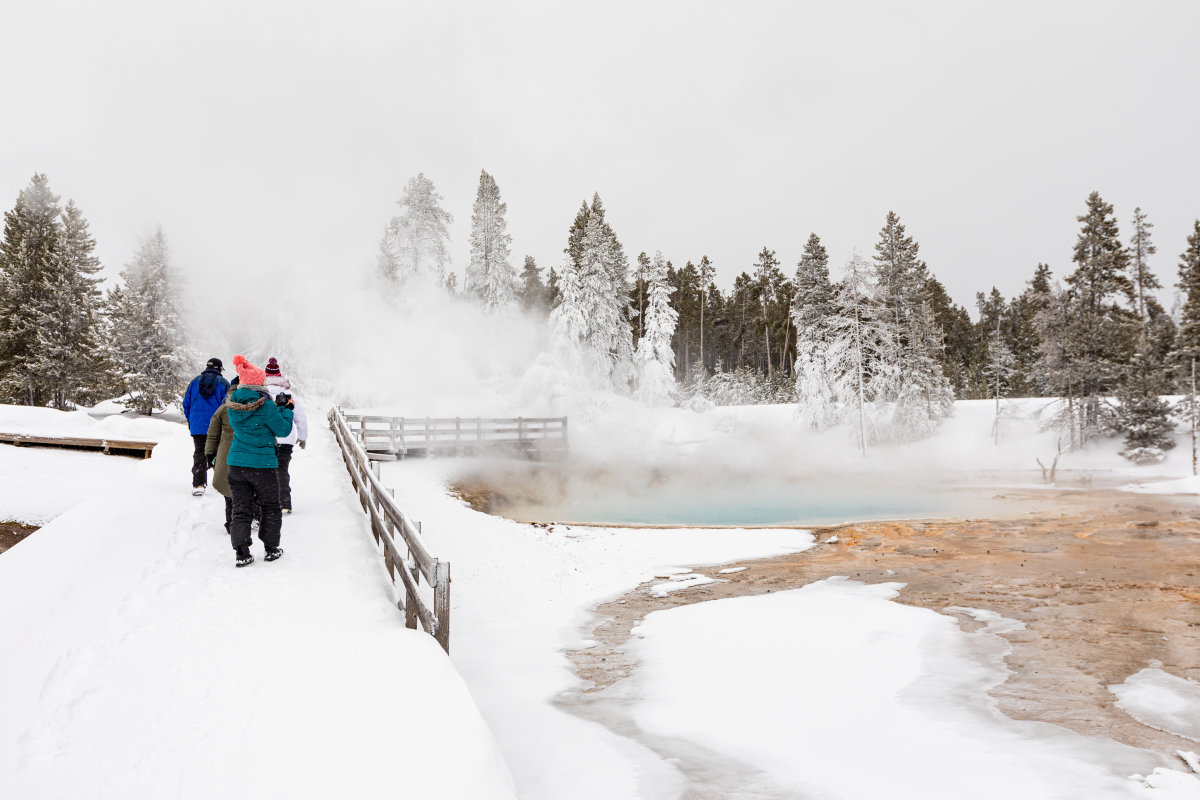
Yellowstone National Park in winter feels less like a drive-through itinerary and more like a quiet, snow-covered expedition. Steaming thermal features, snow-dusted forests and winter wildlife create a different experience from the busy summer season.
The important distinction: most Yellowstone roads close to regular wheeled traffic in winter. The National Park Service says the North Entrance to the Northeast Entrance is the only park road generally open year-round to regular vehicles. Most other roads are closed to regular traffic from early November to late April and reopen to limited oversnow travel from mid-December to mid-March.
Make the trip easier by choosing an authorized snowcoach or snowmobile tour and giving yourself enough time to enjoy the park once you arrive. From Cody or Jackson, winter access becomes part of the adventure rather than a limitation.
2. Why Choose Jackson and Grand Teton for a Winter Road Trip?
Jackson gives a winter road trip an easy rhythm: mountain views during the day, a walk through town in the afternoon and plenty of places to warm up when the temperature drops.
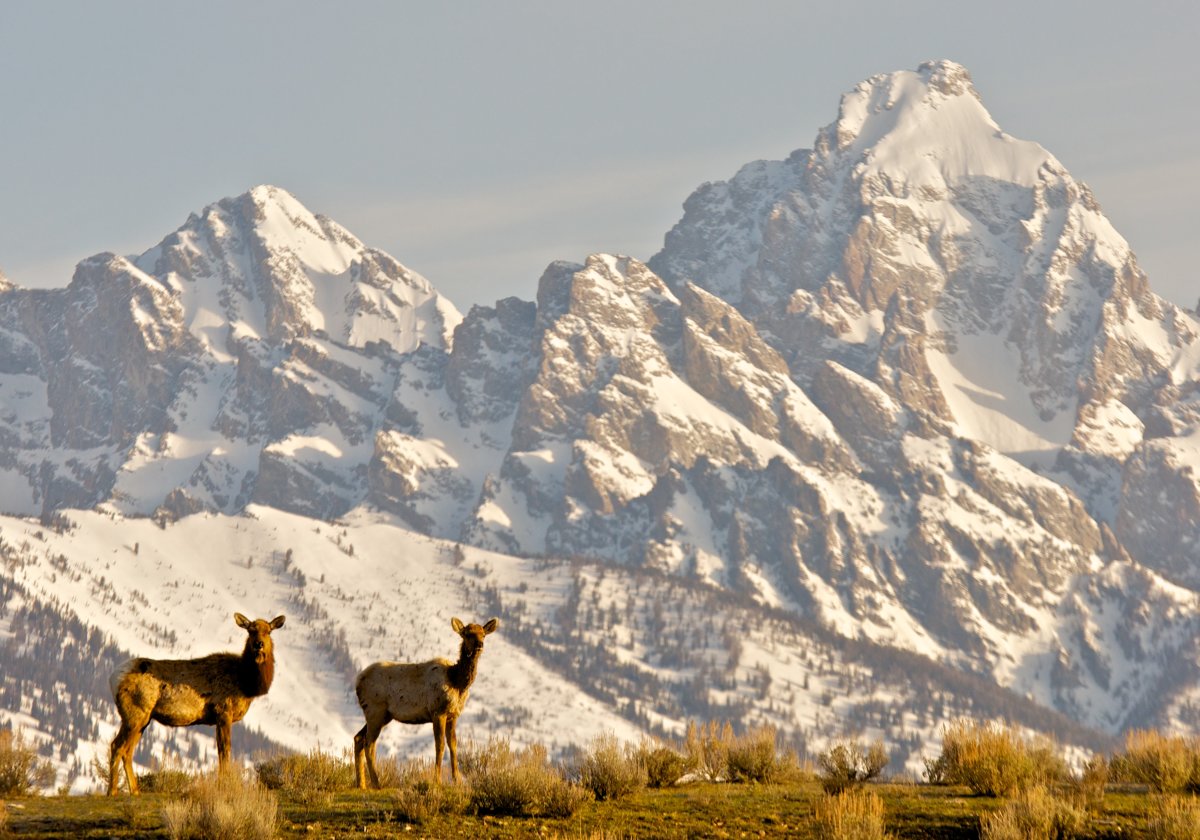
Grand Teton National Park remains part of the experience, but winter access is different from summer. The main highway routes through the park corridor, including U.S. 89/191 and U.S. 26/287, are plowed and open for winter travel from Jackson toward Flagg Ranch, weather permitting. The Teton Park Road closes to motor vehicles between Taggart Lake Trailhead and Signal Mountain from Nov. 1 through April 30 and is groomed as a winter recreation route during part of the season.
Plan a winter day around wildlife viewing, snowy landscapes and non-motorized recreation rather than trying to recreate a summer driving loop. Check road conditions, carry winter gear and give wildlife plenty of space.
3. What Can You See Around Cody and Shoshone National Forest in Winter?
Cody makes a strong winter base for travelers who want Western history, a lively town and access to snowy landscapes. It is also a practical jumping-off point for Yellowstone winter trips, but there is an important seasonal catch: the popular summer drive along the Buffalo Bill Cody Scenic Byway to Yellowstone’s East Entrance is not a regular winter-through route.
Instead, treat Cody as the place to organize a winter Yellowstone experience, then use current conditions and authorized oversnow transportation for travel into the park. Around Cody and Shoshone National Forest, winter recreation can include snowshoeing, cross-country skiing and snowmobiling where conditions and access allow.
The route is especially rewarding when you leave a little daylight for the landscape. The North Fork of the Shoshone River corridor and the surrounding mountain scenery show why this part of Wyoming is a favorite road-trip landscape in every season.
4. Why Take a Winter Road Trip to Pinedale and the Wind River Range?
For travelers who want a true winter road-trip feel without relying on a closed scenic byway, Pinedale is a strong choice. U.S. 191 brings you into the area from the Yellowstone region, with broad views, snowy forests and the Wind River Range rising beyond the town.
Winter conditions can make mountain travel challenging, so build flexibility into the drive. Check WYDOT before setting out, watch the forecast and be prepared to change the timing or route when conditions deteriorate.
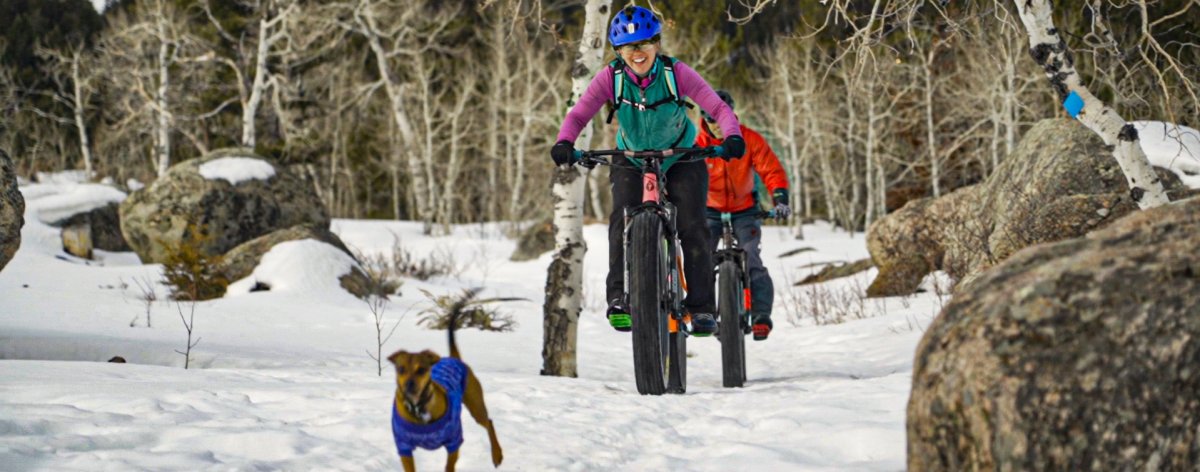
Once you reach Pinedale, shift the focus from the windshield to the landscape. Winter activities in the area can include snowmobiling, ice fishing, skating and cross-country skiing, depending on snow and local conditions. The town also offers an easy place to warm up, eat and spend the night before the next leg of your trip.
5. What Makes Saratoga a Good Winter Road Trip Base?
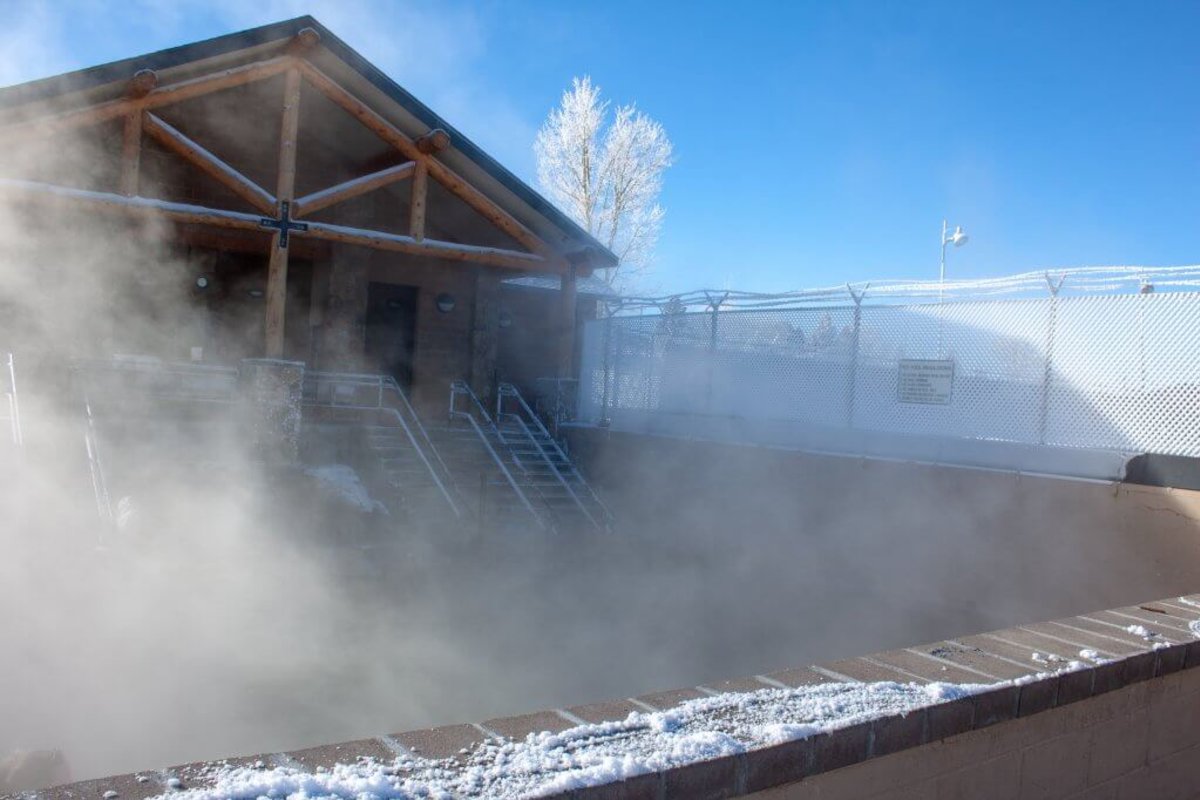
Saratoga is built for the kind of winter road trip that rewards a slower pace: a scenic drive into town, time outside, a warm meal and a soak before bed.
Just be careful with one assumption: the Snowy Range Scenic Byway itself closes for winter. The byway typically closes in mid-November and traditionally reopens before Memorial Day weekend, depending on snow removal and road conditions. So winter travelers should not plan to drive straight through the Snowy Range on Highway 130.
Instead, use Saratoga and nearby communities as a winter base for hot springs, snowmobiling, cross-country skiing and other cold-weather recreation. When the byway is closed, the season changes the itinerary rather than ending it.
6. Why Visit Sheridan and the Bighorn Region in Winter?
Sheridan offers a useful mix for a winter road trip: a historic downtown, nearby mountain recreation and easy access to the landscapes of the Bighorn region.
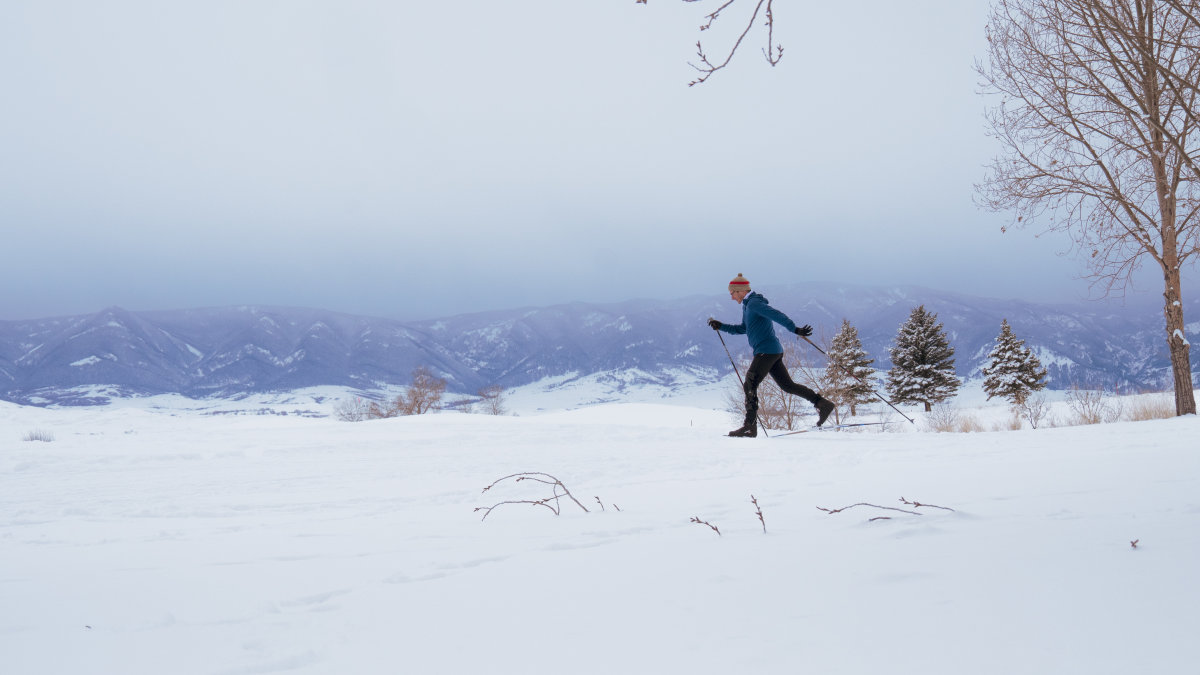
Winter travelers can build a day around Sheridan itself, then head toward Bighorn National Forest when road and weather conditions allow. Snowshoeing, cross-country skiing and downhill skiing are among the ways to experience the region in winter, while the town provides a comfortable place to reset between outdoor outings.
The big lesson here is to respect mountain passes. Routes that are scenic and straightforward in warmer months can become slow, slick or temporarily inaccessible in winter. Check WYDOT conditions before crossing the Bighorns and be ready to stay closer to town when weather moves in.
7. What Can You Do in Casper and Casper Mountain in Winter?
For travelers who want winter recreation without committing to a remote mountain-to-mountain drive, Casper is one of the easiest places to build around. The city combines museums, restaurants and lodging with quick access to Casper Mountain.
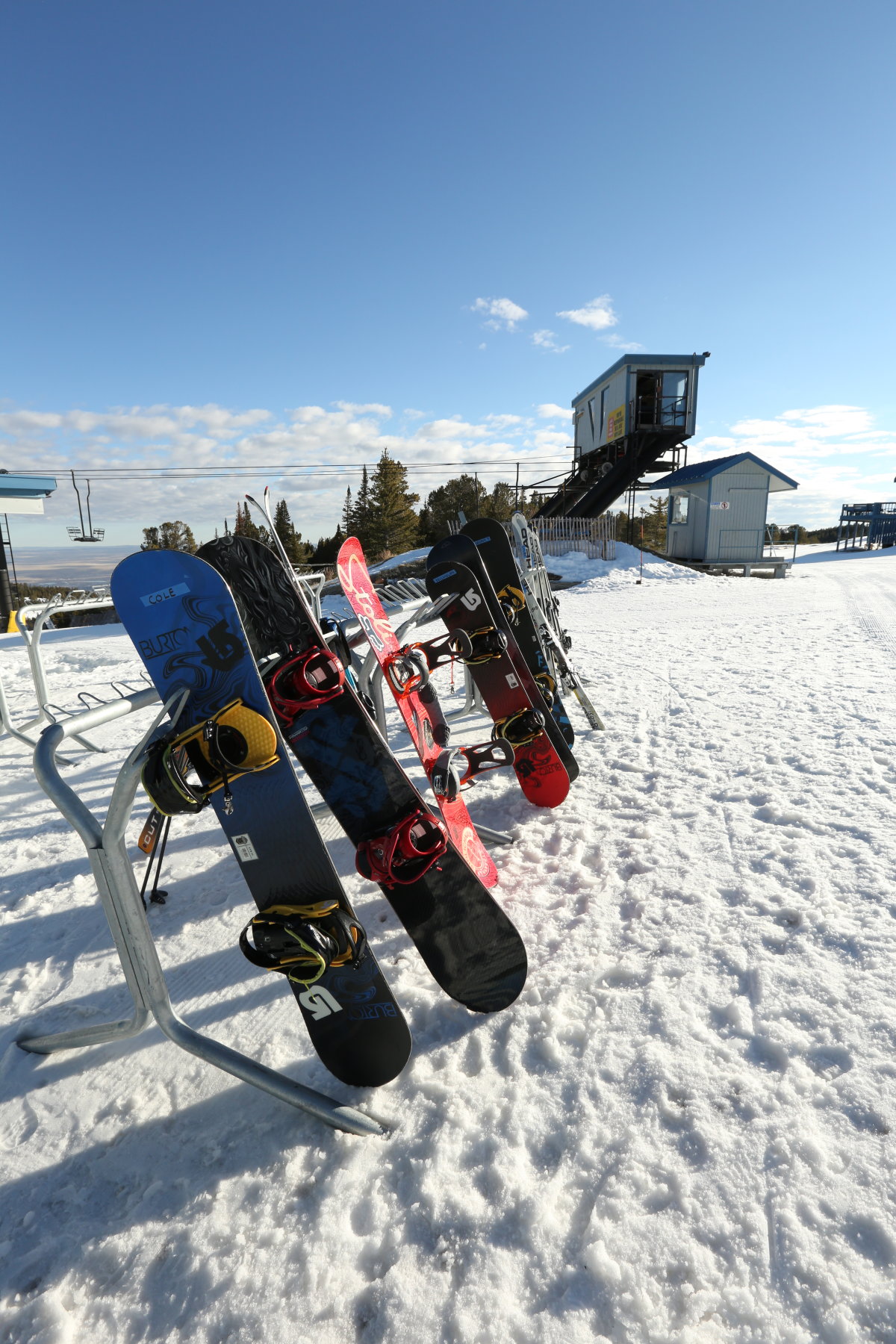
Spend part of the day in town, then head uphill for winter activities such as downhill skiing, snowboarding, cross-country skiing, snowshoeing or fat biking when conditions allow. That mix makes Casper especially useful as a stop on a longer Wyoming road trip.
Because Interstate 25 and other major highways connect Casper with several parts of the state, you can use the city as a mid-trip reset point before continuing north, south, east or west. As always in winter, let road conditions—not a rigid itinerary—set the schedule.
How Should You Plan a Winter Road Trip in Wyoming?
• Check road conditions before every major leg. WYDOT’s 511 system is the authoritative source for current Wyoming road conditions, closures and restrictions. Conditions can change quickly.
• Keep your itinerary flexible. A route that is clear in the morning may be affected by wind, snow or reduced visibility later in the day. Build in extra time and a backup plan.
• Pack for the car, not just the destination. Bring winter layers, a snow brush, ice scraper, blankets, food and water, a first-aid kit and other emergency supplies.
• Know the seasonal rules for national parks and scenic byways. Yellowstone and Grand Teton have winter road restrictions and high-elevation scenic byways can close for the season.
• Leave room for the weather. Winter road trips are at their best when you are willing to slow down, linger in a town or change the order of your stops.
How Can You Travel Responsibly in Winter?
Winter travel asks for a little more patience. Slow down around wildlife, stay on designated routes and recreation areas, give snowplows plenty of room and never drive around a closed-road gate. When conditions are poor, the most responsible choice may be to wait, reroute or spend an extra night in town.
Winter also makes small-town stops more meaningful. A meal, museum visit or conversation with a local business owner can turn a long drive into part of the trip rather than something to get through.